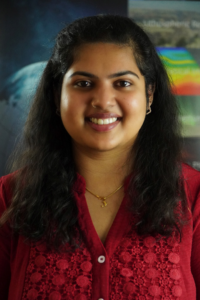
Get Familiar with Our Team
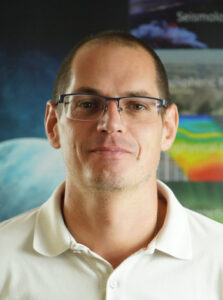
Dr. hab. Michael Nones
Dr. Nones is the PI of WARISIN project. Michael Nones is an Associate Professor at the Department of Hydrology and Hydrodynamics, Institute of Geophysics, Polish Academy of Sciences. His research focuses on fluvial hydromorphology, combining numerical modelling with monitoring techniques both in situ and from remote sensing. He integrates field information and satellite-derived data to infer changes in fluvial and coastal environments, with a particular focus on the transport of suspended matter like sediments and other pollutants. His research aims to increase our understanding of transport dynamics in freshwater and transitional systems.

Dr. Kaveh Ghahraman
Kaveh Ghahraman is the co-investigator of WARISIN project. He is an Assistant Professor at the Department of Hydrology and Hydrodynamics, Institute of Geophysics, Polish Academy of Sciences. His research focuses on the geomorphological processes and dynamics of natural hazards, with a particular emphasis on flooding and its interaction with landforms and anthropogenic activities. He integrates optical and synthetic aperture radar (SAR) satellite datasets with machine learning algorithms to analyze and model geomorphic systems and hazard-prone environments. His work aims to advance the understanding of landscape evolution and to improve the assessment and prediction of natural hazards through the combined use of field observations, remote sensing, and data-driven approaches.